Dora Baltea and temperatures: this is why at Totem Adventure we dress you in neoprene (even in the sun)
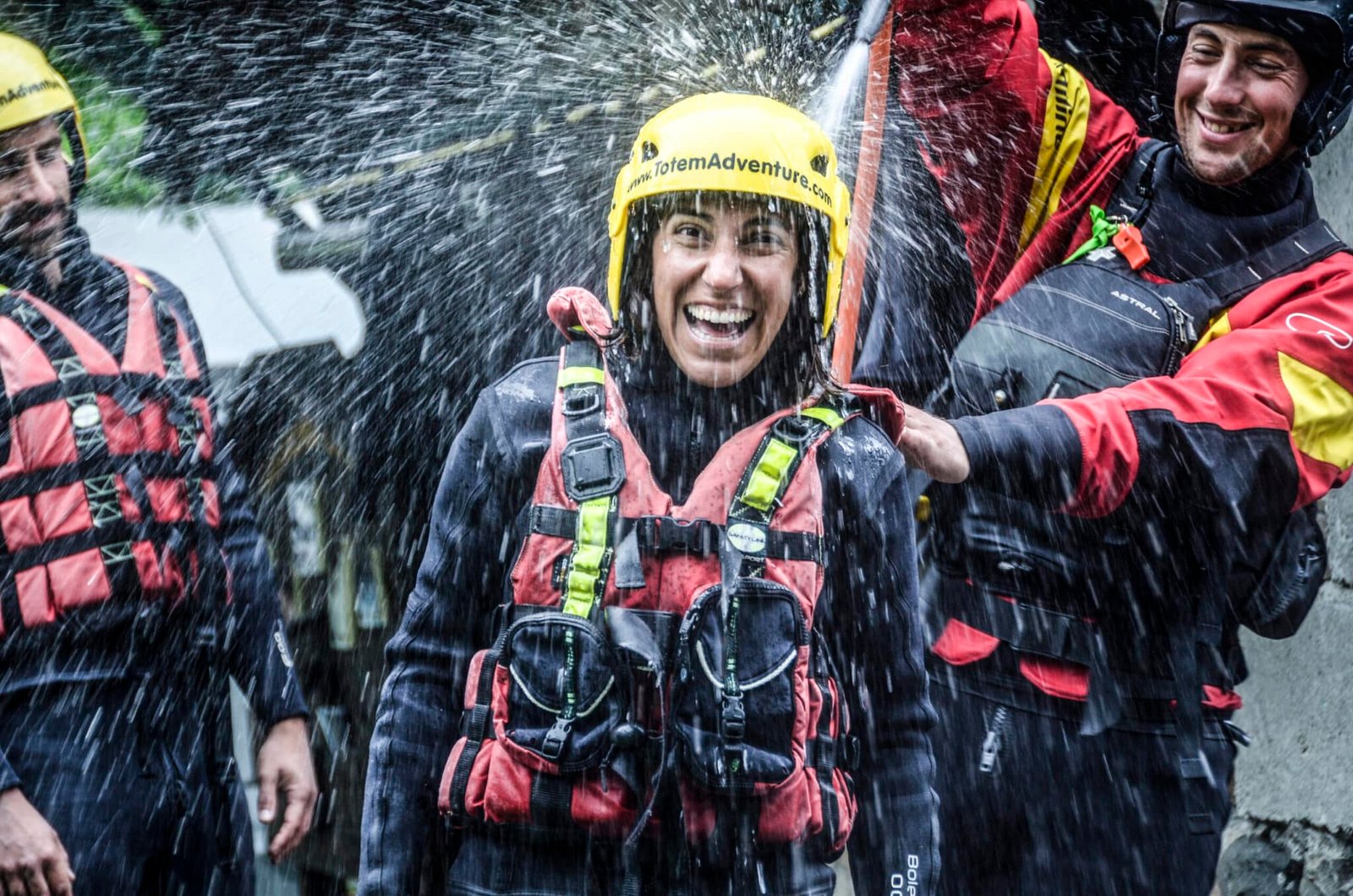
When you arrive at the base for rafting in the Aosta Valley, After the technical briefing we take care of the equipment. For the river we provide full-length wetsuit and a neoprene jacket, both of which are ideal for braving the lively waters of the Dora, nice and cool even on sunny days.
Why rafting clothing is essential
In the Aosta Valley, conditions can change quickly: a sunny day does not automatically mean warm water. Between sunny and shady areas, water coming from high altitudes (from Mont Blanc!) and variations in flow rates, the thermal sensation on the river can change rapidly.
Therafting clothing right is not a detail: it is what makes the experience enjoyable and consistent from start to finish.
How water cools the body
On the river, one cools down faster than one would expect, because water removes heat from the body much faster than air. Dispersion occurs mainly by:
-
Conduction - direct contact with water
-
Convection - moving water “carries away” heat continuously
In rafting in mountain rivers, This effect is amplified: you are in a dynamic environment with turbulence and spray, constantly wet.
Neoprene: thermal protection and comfort
The neoprene is the ideal material for dealing with cold water. Technically, it is a synthetic rubber (polychloroprene) processed as closed-cell foam: there are gas-filled microcells inside.
These microcells:
-
They conduct heat much less than water
-
Limit heat exchange and internal movements that would accelerate heat loss
In practice, neoprene does not create heat, but slows down the loss of body heat.
How neoprene works when you get wet
Rafting equipment is designed to work even when wet. A small amount of water enters between the skin and neoprene; if the fit is correct, the layer remains thin and stable, the body quickly brings it up to temperature and the neoprene helps to maintain it.
At the beginning the first entry into the water is felt, it is normal: after a few minutes the body finds its balance and the feeling becomes manageable. The goal is not “not to get wet”, but stay well throughout the experience.
How to wear rafting equipment correctly
After the briefing at the base, we don't just hand over your equipment: we help you set it up properly. This little trick:
-
It keeps the thermal comfort on the river
-
Allows you to concentrate on paddling and having fun
In particularly cold weather, we recommend wearing a wetsuit under the wetsuit. tight-fitting technical shirt (polyester/elastane). It is best to avoid cotton, which absorbs water and dries slowly.
What to bring to rafting
We ask only a few practical things from you:
-
Costume or technical underwear
-
Towel
-
Complete change
After the descent, changing straight away is the best way to stay comfortable and enjoy post-rafting without shivering.
Equipment safety and maintenance
Therafting equipment is not just “dressing”: it is a fundamental part of safety. We handle it with care, checking and sanitising it carefully, to ensure comfort, functionality and reliability outing after outing.
At a glance: neoprene and comfort in the Aosta Valley
In Aosta Valley, and on mountain rivers such as the Dora, you need suitable rafting clothing. Neoprene means:
-
Thermal protection
-
Continuity of comfort
-
Barrier against heat loss
So the experience remains enjoyable from start to finish, even when conditions change along the way.
If you have doubts about what to bring or how to dress according to the conditions of the day, write to us: we will advise you on the best outfit.